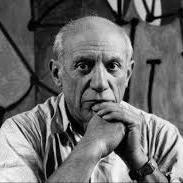
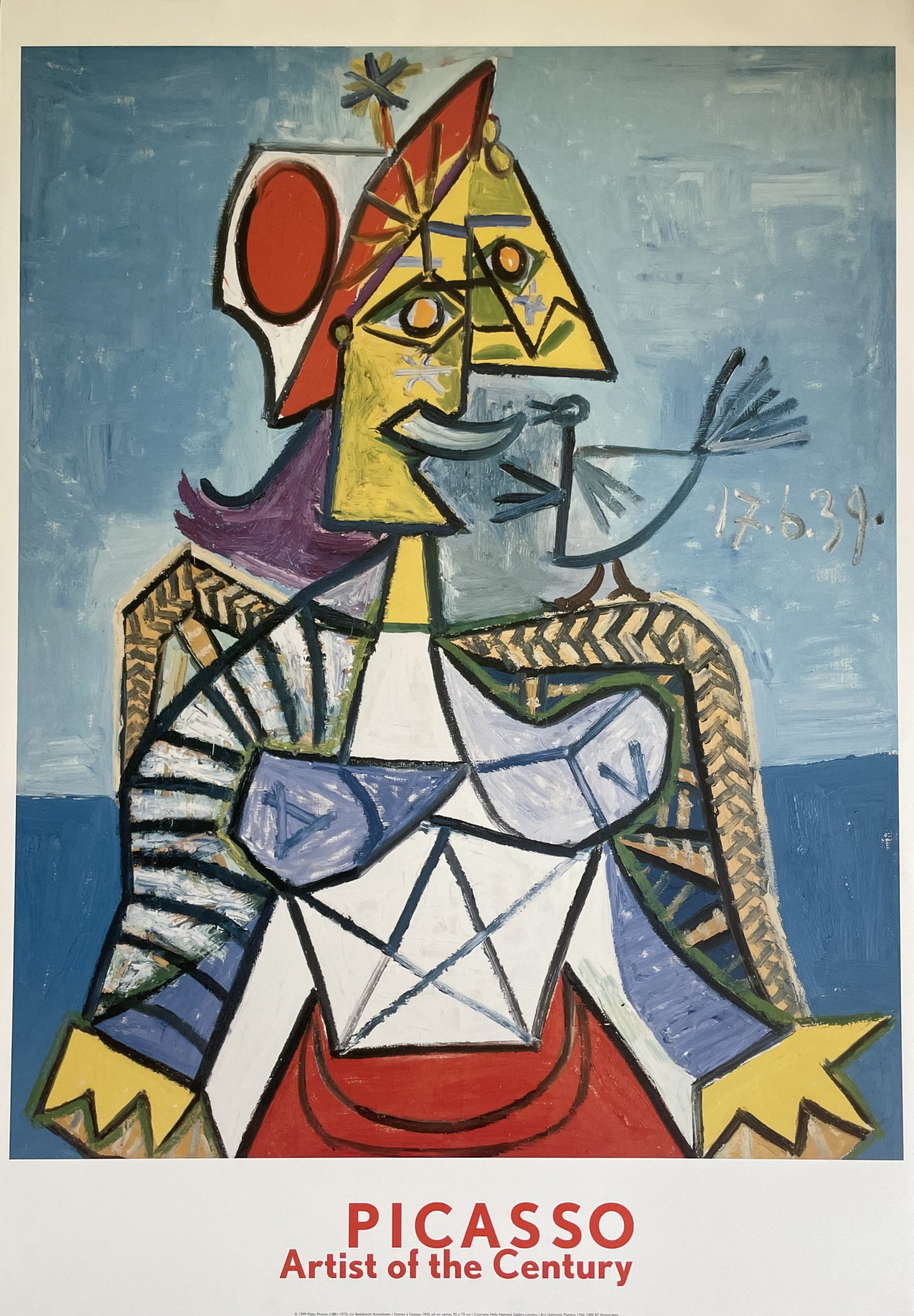
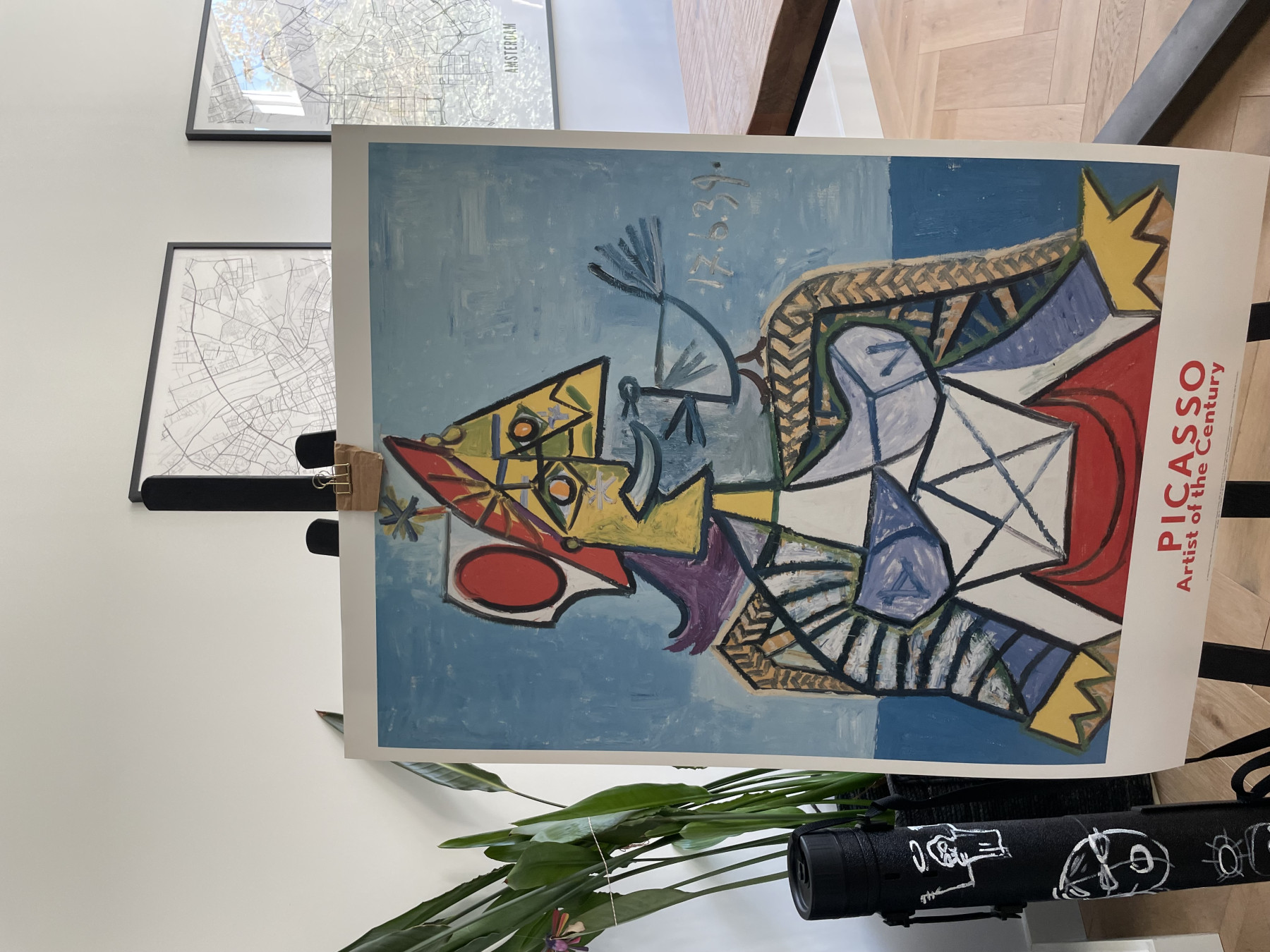
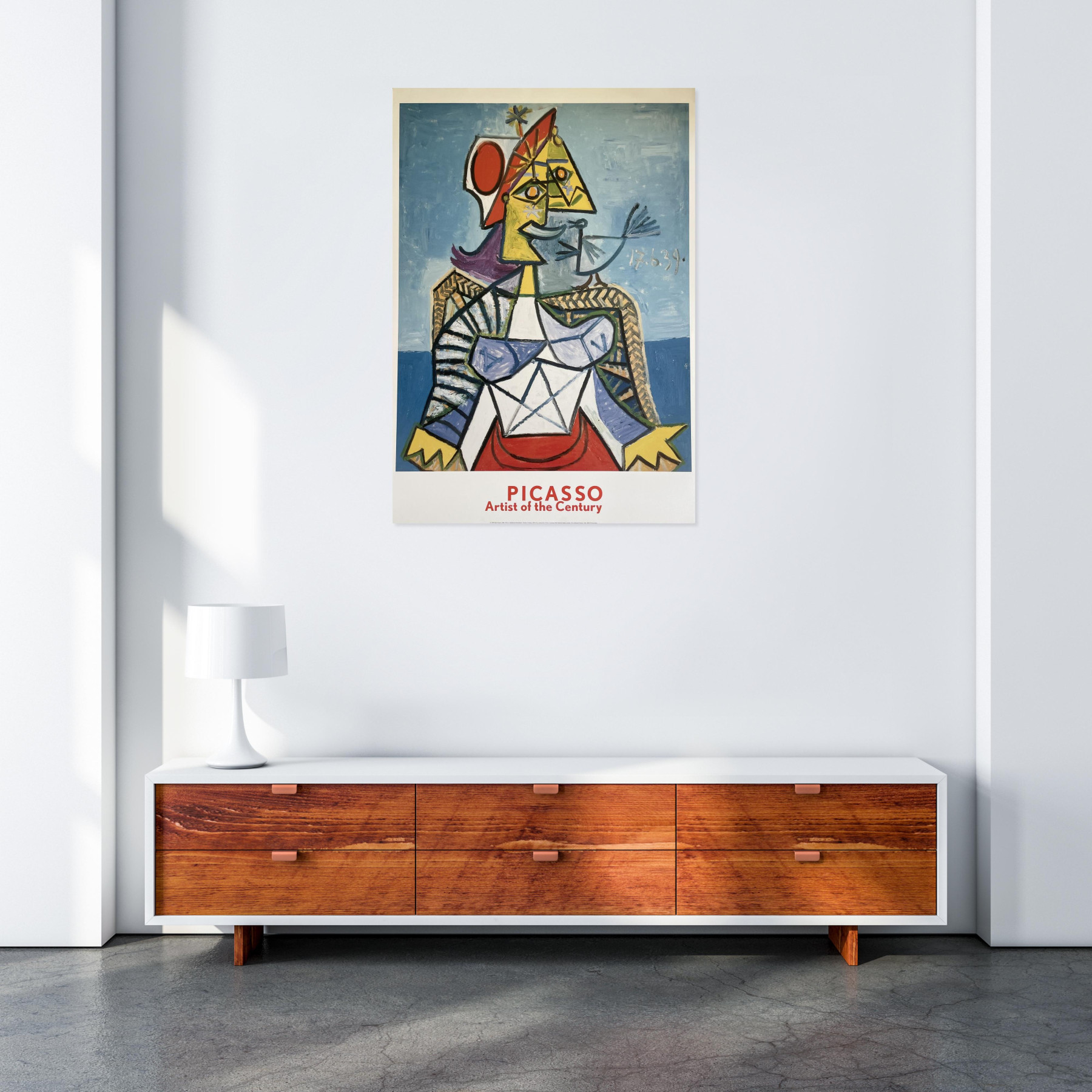
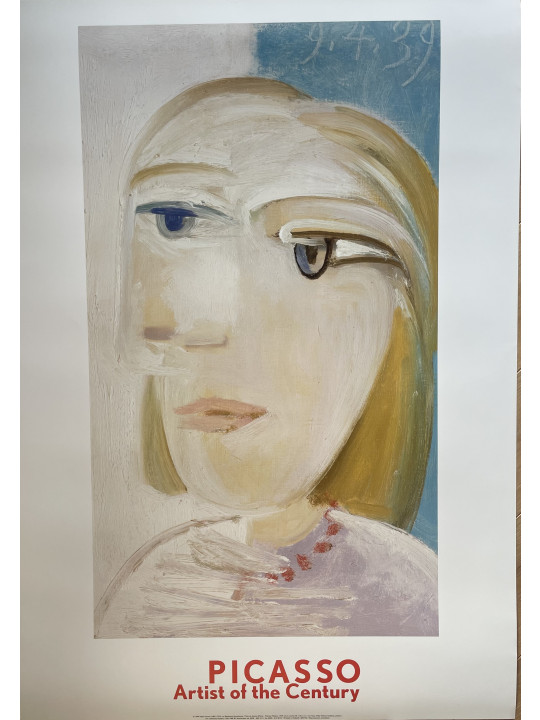
« To me there is no past or future in art. If a work of art cannot live always in the present it must not be considered at all », it is surely what guaranteed Pablo Picasso his universal and timeless recognition! Inspired by his passions of a given moment, and pushing the boundaries of art, he is considered among the most influential artists of the 20th century. His paintings, sculptures, prints and ceramics are absolutely key pieces in the museums of modern art of the world and have influenced some of the greatest artists. Born in 1881 in Malaga, Pablo Picasso was a real art prodigy. At the age of 8, he painted his first oil paintings, at 15 he entered Barcelona's art school, at only 19, he represented Spain the Exposition Universelle in Paris with « Last Moments ».
Following that, Picasso moved to Paris and discovered Toulouse-Lautrec, Degas, Gauguin and Cézanne. The suicide of his friend Casagemas, with whom he lived in Paris, had a profound effect on him and his sadness permeated all his canvases at the time, this was Picasso's « blue period ». From 1905, his melancholy and blue tones were replaced with joy and rose hues, when the painter fell in love with Fernande Olivier and moved to Bateau Lavoir, where he met artists and writers of the time: Matisse, Apollinaire, Jean Cocteau… this was his « rose period ».
From 1906, his obsession with a more complete representation of space inspired him, along with Georges Braque, to decompose objects and recreate them again on the canvas, in the manner of a collage, to show all facets of them. It was the emergence of Cubism that brought back into play the notion of perspective in art. His work « Les Demoiselles d'Avignon », breaking completely with all the codes of the era, sparked debate and would change, in an irreversible way, the rules for artistic creation in the 20th century.
Judging the image to be complicated to read, he abandoned Cubism in 1915 in favour of more traditional portraits, until the Spanish Civil War, when he painted his largest painting: « Guernica », depicting the horror of the Spanish Civil War and marking the beginning of his political engagement.
Picasso died in 1973 in Mougins, leaving behind me a life rich in amorous passions and moral commitments, permeating his work and marking the history of art indelibly. His work is omnipresent in all the largest modern art collections: at the Musée Picasso in Paris, at MoMA in New-York, in the Museo Reina Sofia and many others...
 English
 Français